
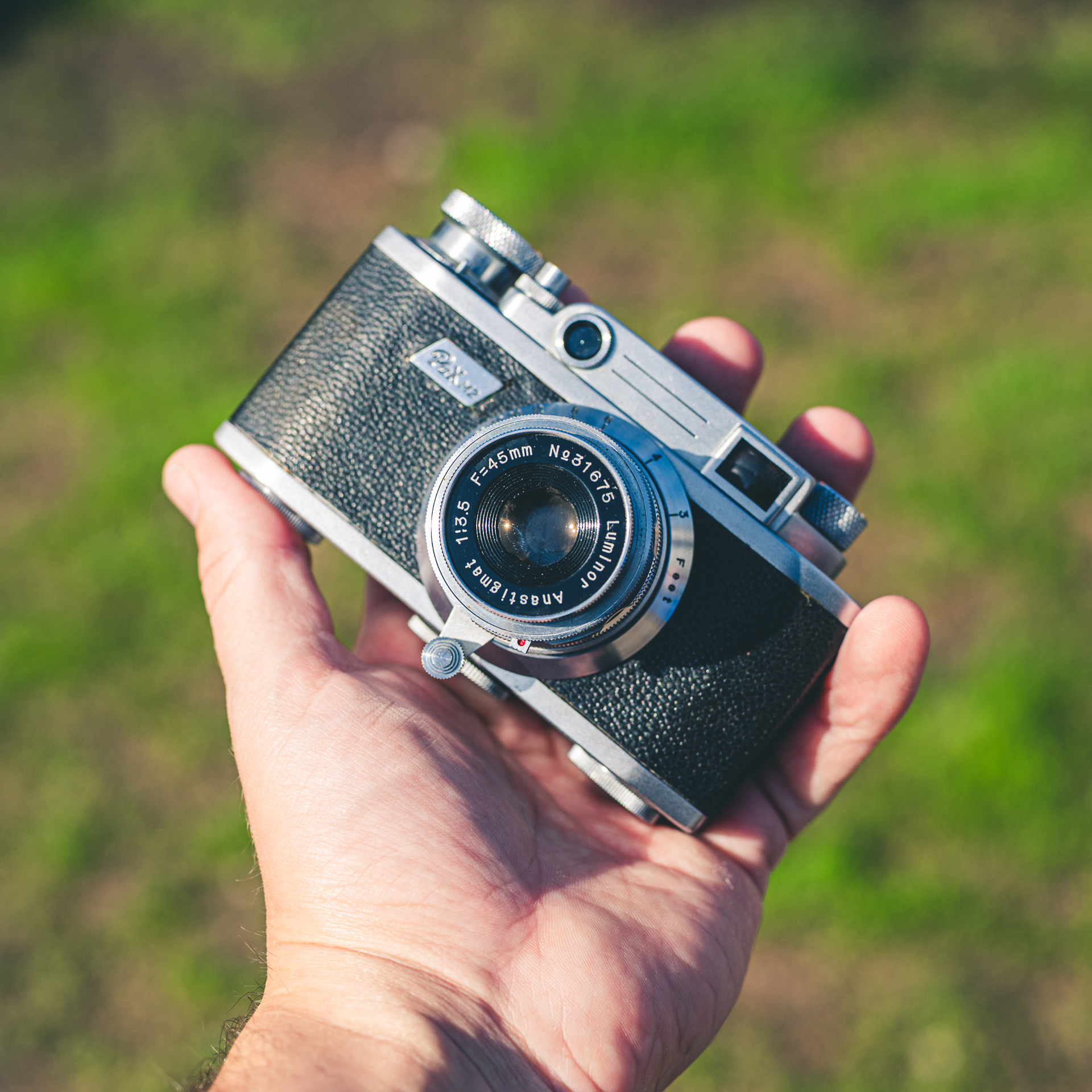
So-called Leica clones are often vilified as inferior counterfeits, but is this a reputation well-deserved or simply snobbery? I give this nearly 70-year-old Yamato Pax M2, one such reported clone, a fair chance at redemption through a one-roll review.
Introduction
As of writing, it is 2025, which makes this little Yamato Pax M2 camera from 1956 sixty-nine-years old. It’s remarkable to think that cameras which are that old remain mostly serviceable with modern film-stock. This camera, now older than the average life-expectancy of most people across the globe is still usable. In its own way, that’s amazing.
Looking at it, sat on my table, you can only wonder where this camera has been. What history has it captured? Family holidays? Political or historical events? Places? Its age adds magic, possibilities, and a tenuous connection to lost history. This old M2 holds secrets, and secrets are always sexy.
While I can’t tell you a story about this particular camera’s past, I can tell you what it’s like to use. As there is little about this camera online, I wanted to give it a fair shot. This is despite the fairly poor reputation Pax cameras seemingly attract. But if you’re looking for quick summaries it’s this: this camera is a true pleasure to hold. It’s by no means perfect (I’ll get into that), but if you want to create photos that feel authentic to the average photography experience from this era (and not the expensive cameras of the era), the purposefulness of its mechanisms, size, and feel provide a blissful yet deliberate photography experience.
The History Behind the Pax M2
The Yamato company behind the Pax M2 is a little hard to track down, there’s been multiple similarly named companies in Japanese history. The 50s and 60s was an era of cottage-style production in the country, a direct result of post-war measures to entirely re-orientate Japanese manufacturing which includes cars, cameras, and other consumer electronics. Camera Collector suggests Yamato is just one of 440 camera post-war Japanese camera makers that lived and died in this era, with the Yamato brand disappearing off the face of the earth in 1963.
Further to the confusion is that Yamato also sold cameras under a myriad of brands and alternative model names which include Dan, Alpina, Hilka, Konair, Lycon, Barclay, Atlas, Palmat, Minon, Riscor, Rippa, Simflex, and Tac. It reminds me of the mass-produced stuff you see on Amazon – the same product, made in the same factory, but marketed with different names.
This was also an era where the Leica design philosophy was seen as fair game to other manufacturers following the defeat of Germany in the World War and a cancellation of German pre-war patents. Resulting in cameras which are flat out copies of Leica’s such as the Soviet Zorki, or at least deeply inspired by them. The Pax line of cameras certainly sits in this second category.
Compared to the Leica’s ii or iii models, you can certainly see likeness to the design – but it isn’t a direct copy. While a similar weight the camera is quite a bit smaller than the Leica ii (132mm x 66 x 30) to the M2’s 110 x 60 x 30) but a little heavier (403g / 485g). And the internals reviewed as less refined (brass and solder) when compared to Leica’s, but by no means horribly produced. Yamato also made their own shutters, small enough to fit inside the Elmar-sized barrel – a bit of an accomplishment for a factory which not long before was probably producing war materials.
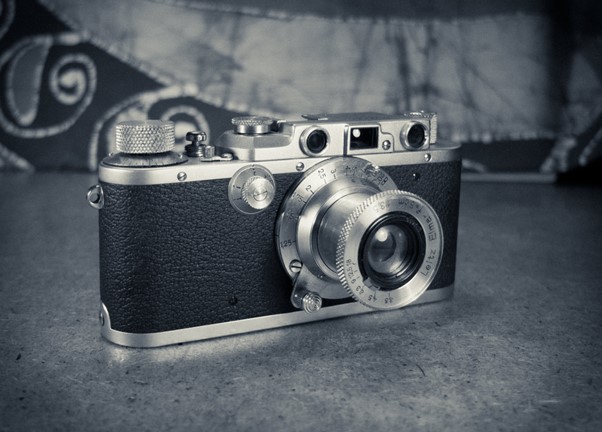
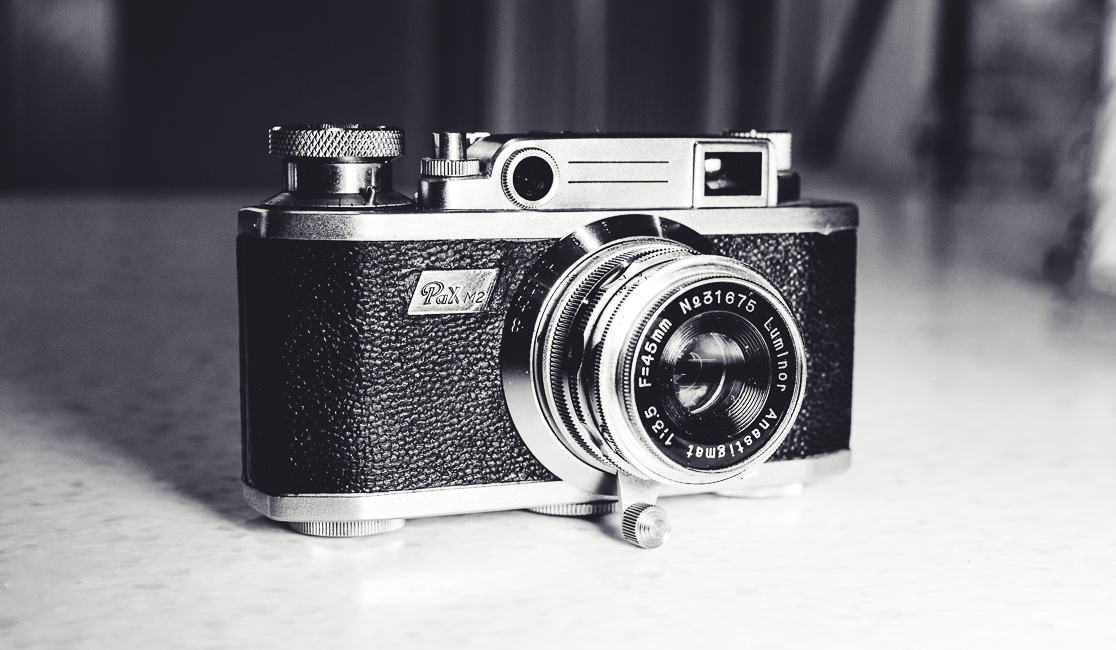
I dare say, it doesn’t look or feel cheap, and just by itself makes for a pretty display piece, if that’s what you’re into.
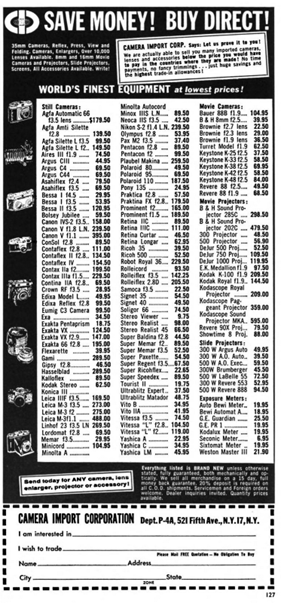
The market for the Pax M2 seems to be primarily the United States, and US servicemen stationed in Japan as a cheap camera. There doesn’t seem to be many knocking around Europe or the UK looking at past sales, and I couldn’t find any UK magazines from the period openly selling them here. How this particular unit ended up in Manchester will remain a mystery.
Based on old magazines from the 1950s, the M2 was priced at $44.95 in the April 1957 issue of Popular Photography – around $515.85 in today’s US dollars (around £380). So hardly a cheap camera, but significantly cheaper than similarly offered cameras at the time. The Leica iiif commanded a whopping $169.50 at the same time, or in today’s currency, $1,945.70 (around £1,460). For a more direct comparison, for £380, you can probably buy a modern-day bridge camera or cheap digital compact, but you won’t be shouting home about the sensor size.
The current-day second-hand market is a little hard to price. A few late 1990s BBS’s had adverts for around $100 (US), while it’s listed in the McKeown’s antique Price Guide (2001) as being in the $55-85 range. Current sold pricing on eBay in the us suggests $30 to 60 with good units as high as $100, and in rare instances they pop up in the UK, £7 (untested) to 80.
Specifications
The Pax M2 offers a limited speed selection, with other cameras going up and beyond 1/500, but that isn’t to say this wasn’t a perfectly usable camera outside providing you’re not using a higher ISO film, but there times where a bit more light would have been nice.
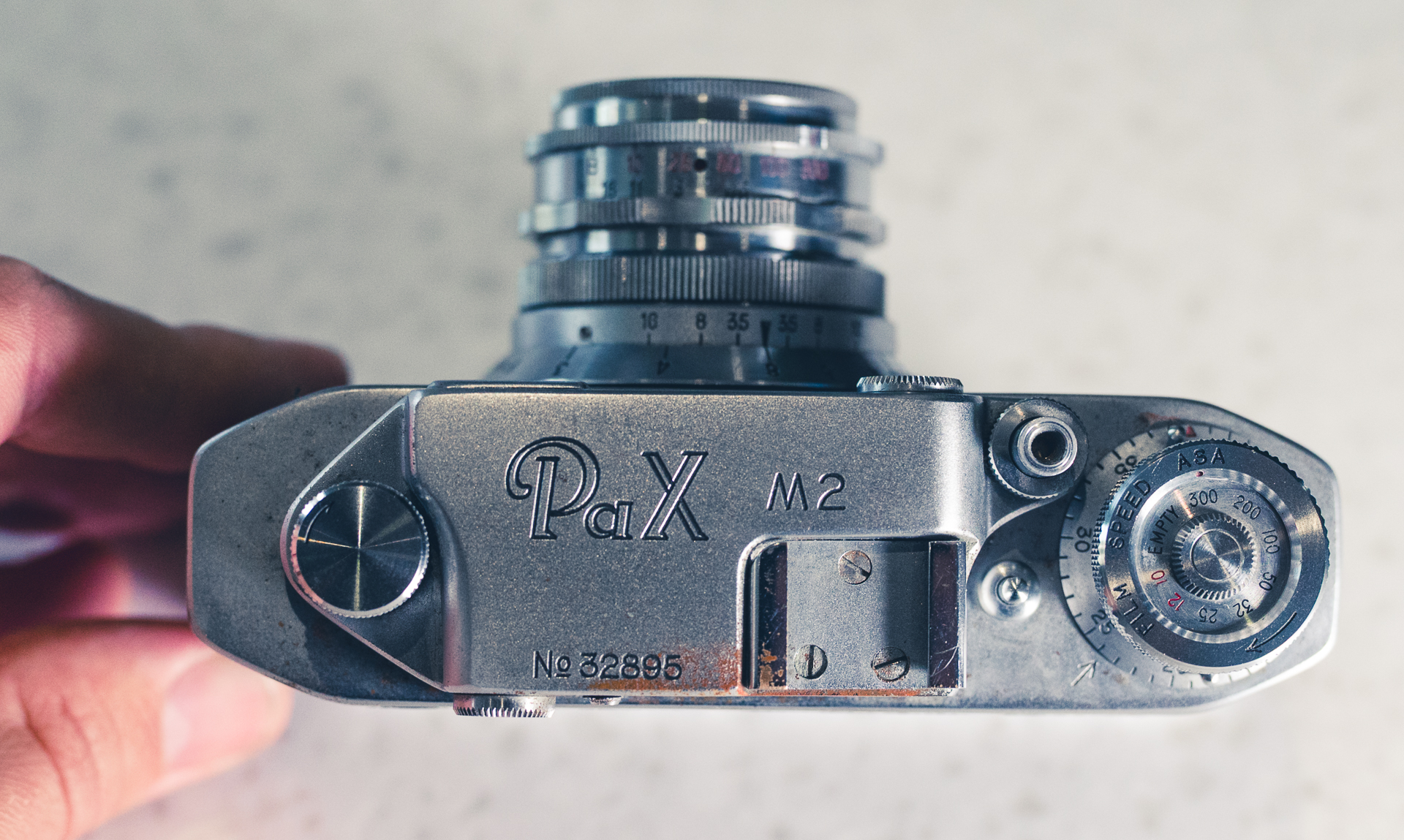
- Lens: Luminor Anastigmat f 3.5 – 16, 45mm coated and colour corrected
- Shutter: Internal leaf shutter with 1/10; 1/25; 1/50; 1/100; 1/300; and bulb modes.
- Although it does seem possible to select speeds in between these with a bit of guesswork
- Although it does seem possible to select speeds in between these with a bit of guesswork
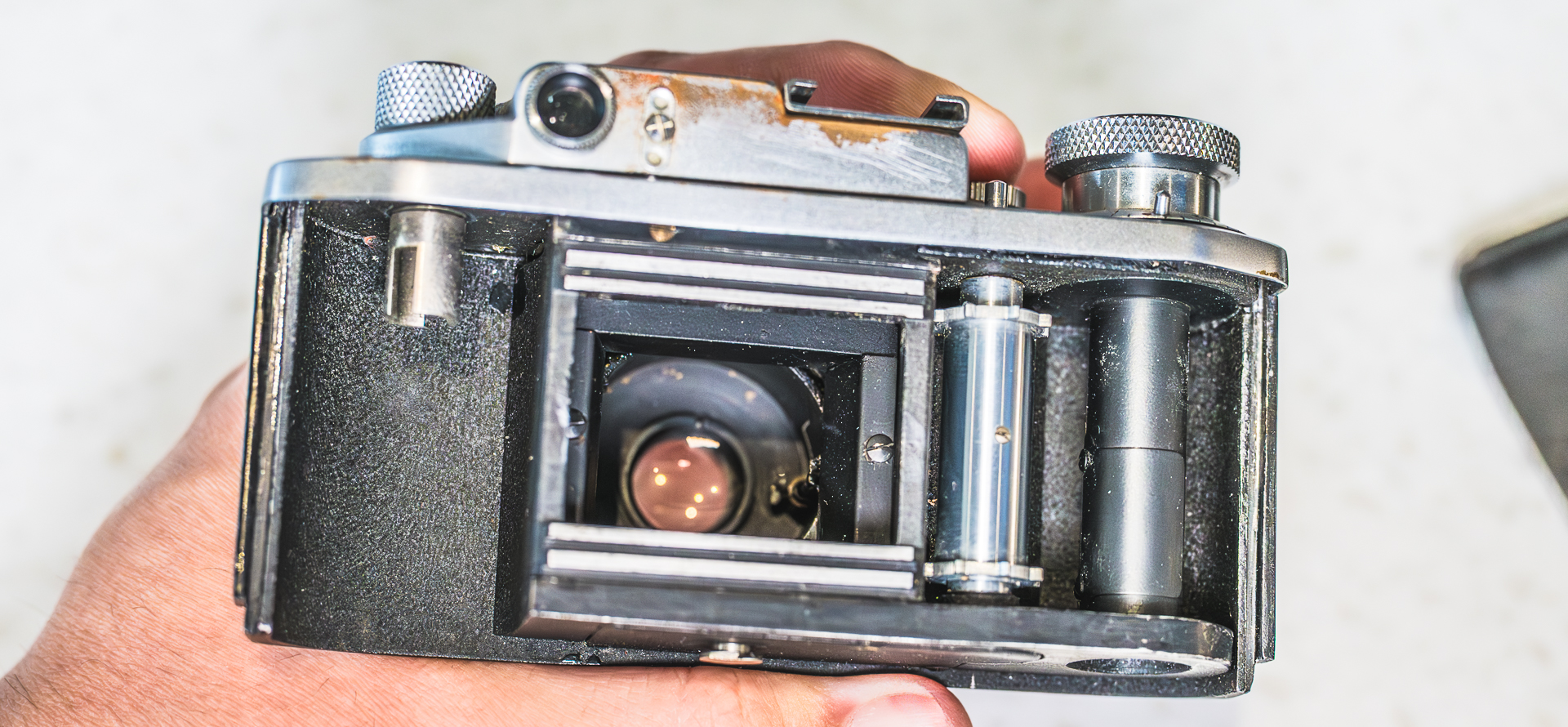
- Automatic shutter cocking (which seems to be the main upgrade on previous Pax models). There is a small window will goes read on the lens when the camera is ready to shoot.
- F-X Flash Synchronization that works with old style flash bulbs, and electronic firing
How this camera came to me
The British charity shop is my normal hunting ground for analogue film cameras. But pickings are infrequent. Especially as charities have clocked onto the exorbitant online prices and have (rightly or wrongly) sought to increase their incomes. Meanwhile at car boot sales, I’m finding sellers pre-prepared with a printout of eBay listings as a pricing structure. This sadly means film cameras are going for far too much, and the £5 camera deals like my Olympus Trip35 and Nikon TW2 are a growing rarity. This is quite a shame, as a fun and cheap way into the hobby is a closing door.
This camera came to me in 2021. I saw a leather camera bag sat on the shelf of a local charity shop, I jumped at the opportunity. More often than not, when you open these bags, they’re empty – but this time I was pleasantly surprised. Upon opening, I saw a camera of solid all-metal construction, intact leatherette, and styling of early Lecia units. The similarities, are of course, no coincidence.
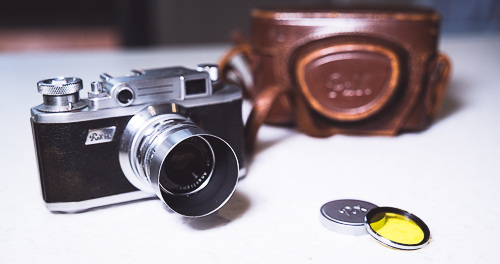
Even little details such as the metal lens cap are a nice surprise. To produce something in metal with the right tolerances is a skill lost as manufacturers moved to plastic. But no, this is metal. It sounds silly to focus on this, but when the little things feel right, solid, and well-built the rest tends to follow.
With it came a lens hood, two filters (yellow & red) and as previously mentioned, the original but somewhat deteriorated leather case. But considering its age, it had kept well. In comparison with the manual, it represented a mostly intact camera only missing the UV filter and manual. There was a little wear to the camera with some of the brass showing over the coating, but there were no major scratches, and miraculously, the lens didn’t have any signs of fungus.
So lots of good news, what was the bad?
The nearly seventy years old lubricant in the focus ring had turned to a solid glue, locking it firmly in place, similarly the advance leaver was also stuck. I thought to myself it’s a good chance to learn little about camera restoration, and at worse it will make a nice display piece. There was no price label on it, and after a short conversation me and the cashier settled on £5.
Fixing the Pax M2
It seems whatever grease/lubricants used by Yamoto has caused most units in their line to have this issue, and thus inoperable. Mike Eckman found similar with their review of the Pax 35. One fix came from this 2009 Flickr post here by Rick Oleson, which explained a process of taking the unit apart and cleaning with Xylene. Something I didn’t quite fancy doing, mostly because the tools involved, and Xylene sounds like nasty stuff.
I did, however, remember a much older piece of advice I had read for old mechanical clocks: Isopropanol (IPA) and heat can soften up old grease and allow it to seep out of mechanisms which can subsequently be replaced. The aim of the game here is to soften the solid lubrication, and apply IPA to wash it out before spraying in something more modern, and less prone to gunking up.
I quickly reappropriated my partner’s hair dryer and got to work. The smell emanated through this process was 1950s for sure. But with enough heat, and after 30 minutes or so the focus ring started to show signs of movement, and not long after that, the focus ring seemed to free up entirely. However, I found that once cooled the grease would re-solidify, so a little disassembly of the focus ring (but not the whole unit) plus IPA dripped in using a cotton bud, followed by some spray silicon lubricant did the job.
Was this the wrong approach? Probably, and I’m more than happy to hear angry comments below (please do set me straight), but it worked enough to put the camera back into commission once again. The same process but on the film advance fixed that too. Writing this a few years later, I did find I hadn’t quite got all the old stuff out, as the focus ring started to stiffen so I repeated the processes.
I do want to also add a little caveat: while the camera seems to work fine through this process, I have no real way of knowing how accurate the shutter speeds are compared to what they should be. Given that cheaper older cameras are not all that accurate anyway, they were never going to be perfect. However, some wonky exposes you’ll see later certainly point to it not being quite right – and I’m unsure if this is just me, the camera, or my fix. But as most of the images came out ok, I hazard to say they’re mostly fine. So don’t be scared off old cameras that are a little seized.
Getting to grips with the Pax M2
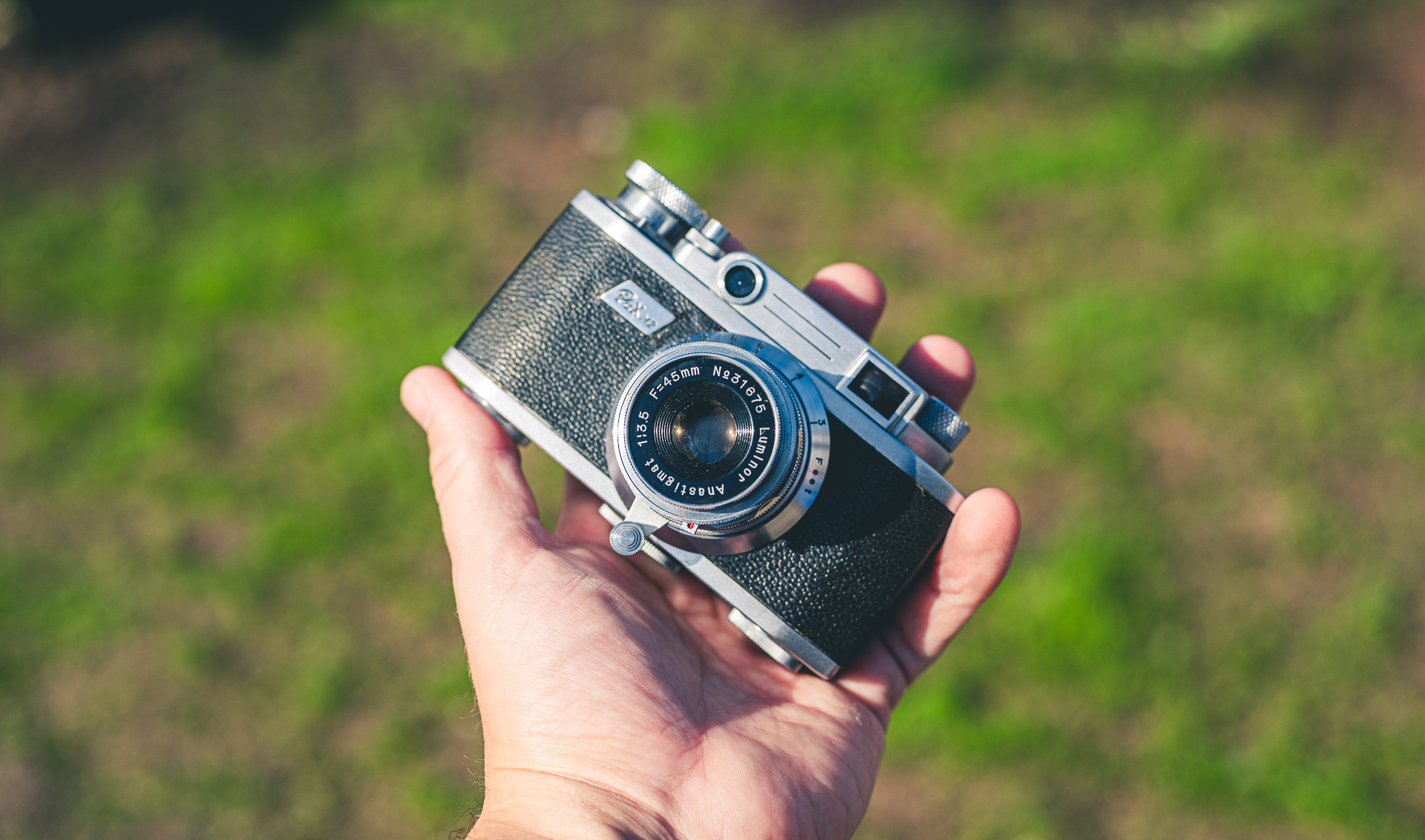
This camera was an interesting experience. Everything I’ve used to date has at least come with some sort of light meter, and the rangefinder focusing system does take time to get used to. But that being said, it these didn’t really represent any sort of major challenges. Light Meter Apps on your phone can be found for the cost of free and when you’ve got your exposure locked down, isn’t too much of a hassle.
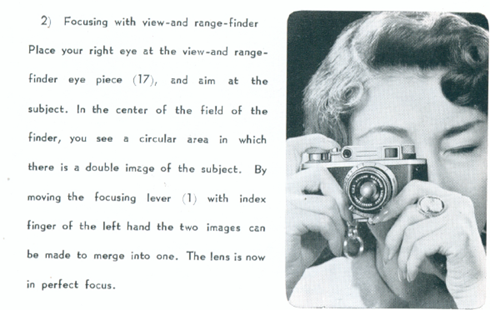
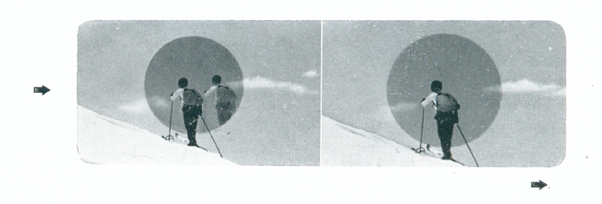
Using the focus ring, aperture and shutter speed rings takes firm, but decisive, movement which provides the reader with the reassurance that behind-the-scenes cogs and internal mechanisms are moving and doing what they’re supposed to. The shutter likewise feels purposeful in this way, taking 326 grams of downwards force to activate which is subsequently accompanied by quiet yet pleasing click. In comparison, my Pentax K1000 needs just over 400 grams, but oddly feels like less due to the increased size of the shutter button and the smoothness of the action. The small size and quiet operation of the M2 also makes you feel a bit like a spy – which is perfect for those interested in candid photography. While advancing the film, you hear a fantastic ratcheting sound, alongside tactile feedback from the ratcheting mechanism while the film progresses.
For something which is supposedly a budget camera – it doesn’t feel it.
But it’s not all great. The weight of the camera seems odd for something so small in the hand. At 485 grams (without film) it’s unusually dense. It also doesn’t’ help that the camera, while functional in design, has little capacity for ergonomics. Presumably this is due to its size. After a while the camera does become a little uncomfortable in the hand, especially as the focus ring ended up being in an awkward position once the M2 is brought up to eye level. Again, in comparison to the heavier K1000, the weight is more, yet because you have more surface space to grab onto gives you a slightly nicer experience.
On that note, the range finding mechanism, is to put it bluntly, unenjoyable. With a viewfinder of 5mm or so in dimeter, it is far too small (especially for glasses wearers), which means getting shots somewhat of a guessing game.
Another annoyance came when I first started shooting with the camera. Either due to user error, or due to the metal sprocket, I felt a pull on the film advance halfway through my first roll. It turned out that the sprocket had ended up ripping, and ruining, the roll of film. Much to my annoyance. Although I have since learned that cameras of this era dislike films longer than 24 exposures. It hasn’t happened since, but I’m terrified of using it for any important shots due to this alone. Likewise, the mechanism for holding the back onto the camera feels it can come off easily, and you’ve got to be careful to latch it on correctly. This is not a camera that’ll say if you’ve made a mistake until it is too late.
This puts my review of how this camera feels to use in an odd position. I appreciate that its 70-years or so old, and I like that it still functions, and I really like that function is purposeful. This all brings me ample enjoyment… but that joy quickly wears down with use.
For me, selecting a roll of film and deciding what camera to use is almost a ritual. I look through and think about what types of photographs I want to take, and what camera I feel like using. But the multiple times I’ve done this since owning it, I’m ultimately reluctant to pick up the M2 if I’m going somewhere special. When I have loaded film into it, it’s is because I enjoy that novelty of a seventy-year-old camera that still works and what comes out of it. But not because I want to be creative with it.
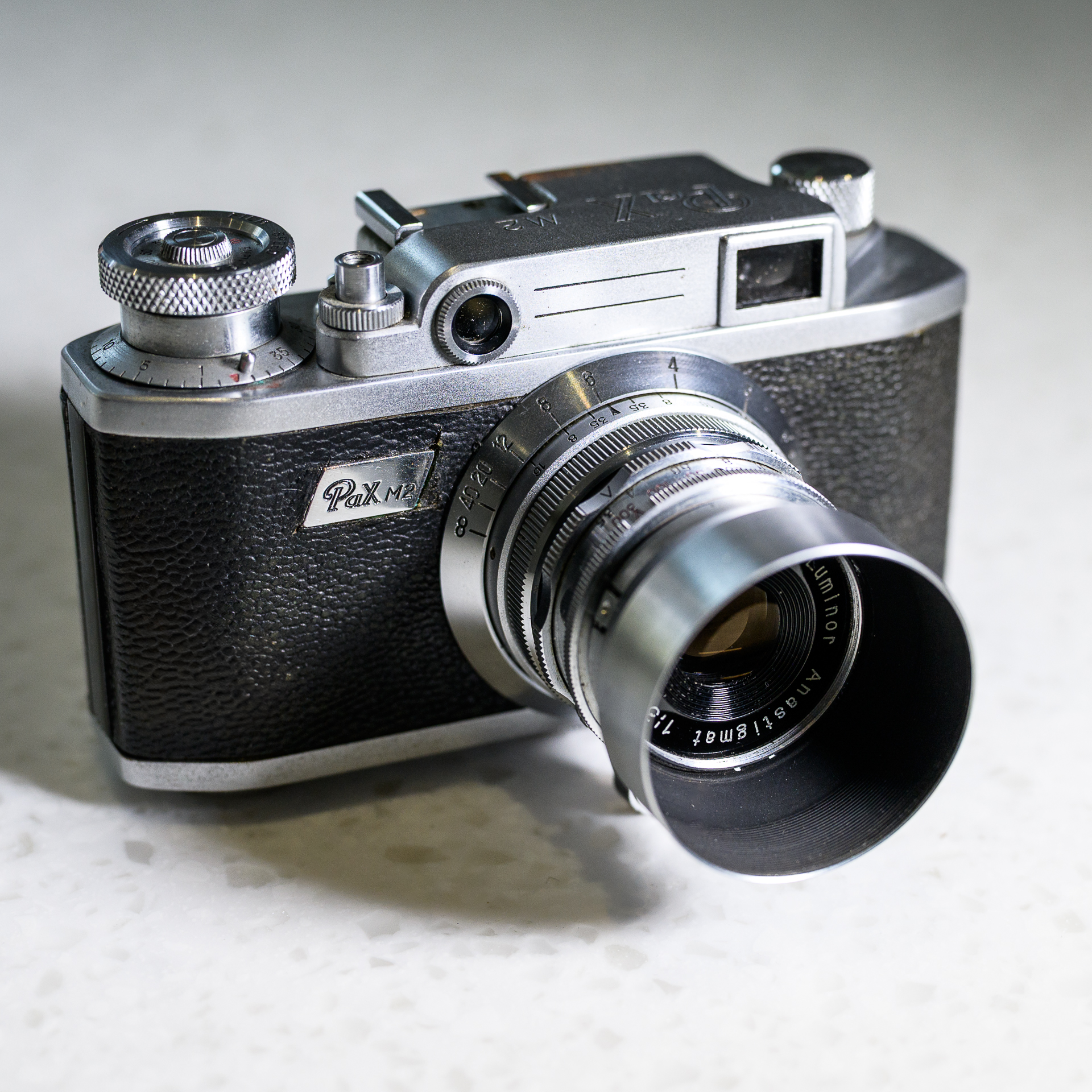
The M2, then, might represent an oddity and a novelty: One best enjoyed at occasion rather than with regular use. I feel like I’m being somewhat harsh, after all it is a camera from the 1950s and when compared to its kin from that era was probably a fine camera. But ultimately, it doesn’t make me love photography or spark my creativity like my other cameras outside of set circumstances where I want to give my photos a perception of age.
This also isn’t to say this camera hasn’t taught me anything at all. It has certainly made me a better photographer, that’s for sure. Much like how using my first film camera forced me to move out of auto mode on my digital cameras, the M2 has given me an appreciation for trusting my own judgment on setting the right aperture and shutter speed for any given ISO and lighting situation before looking at a light meter – that’s a useful skill when trying to get a shot quickly. It feels a lot like the Mr. Miyagi school of teaching Karate by the Wax on, Wax off method. Going back and learning the fundamentals though otherwise boring and repetitive tasks can pay dividends.
All in all, the Pax M2 in use is a novelty. The concept of using it, and the lessons it still has to give, are fun for the user. But it won’t be long until you’re looking over it in favour of the better old reliable in your arsenal. But that isn’t to say you can’t produce some beautiful photos.
What about the photos?
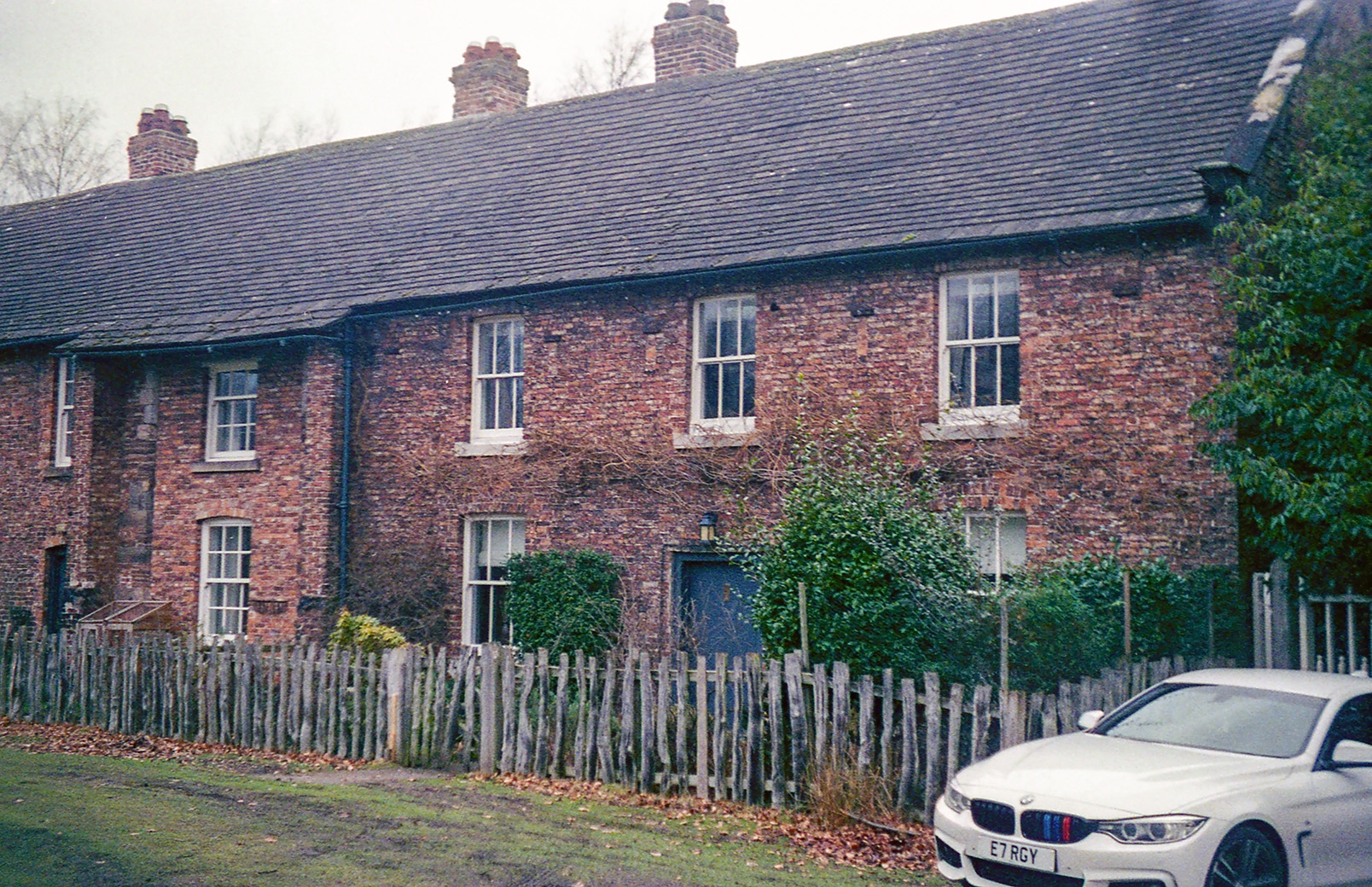
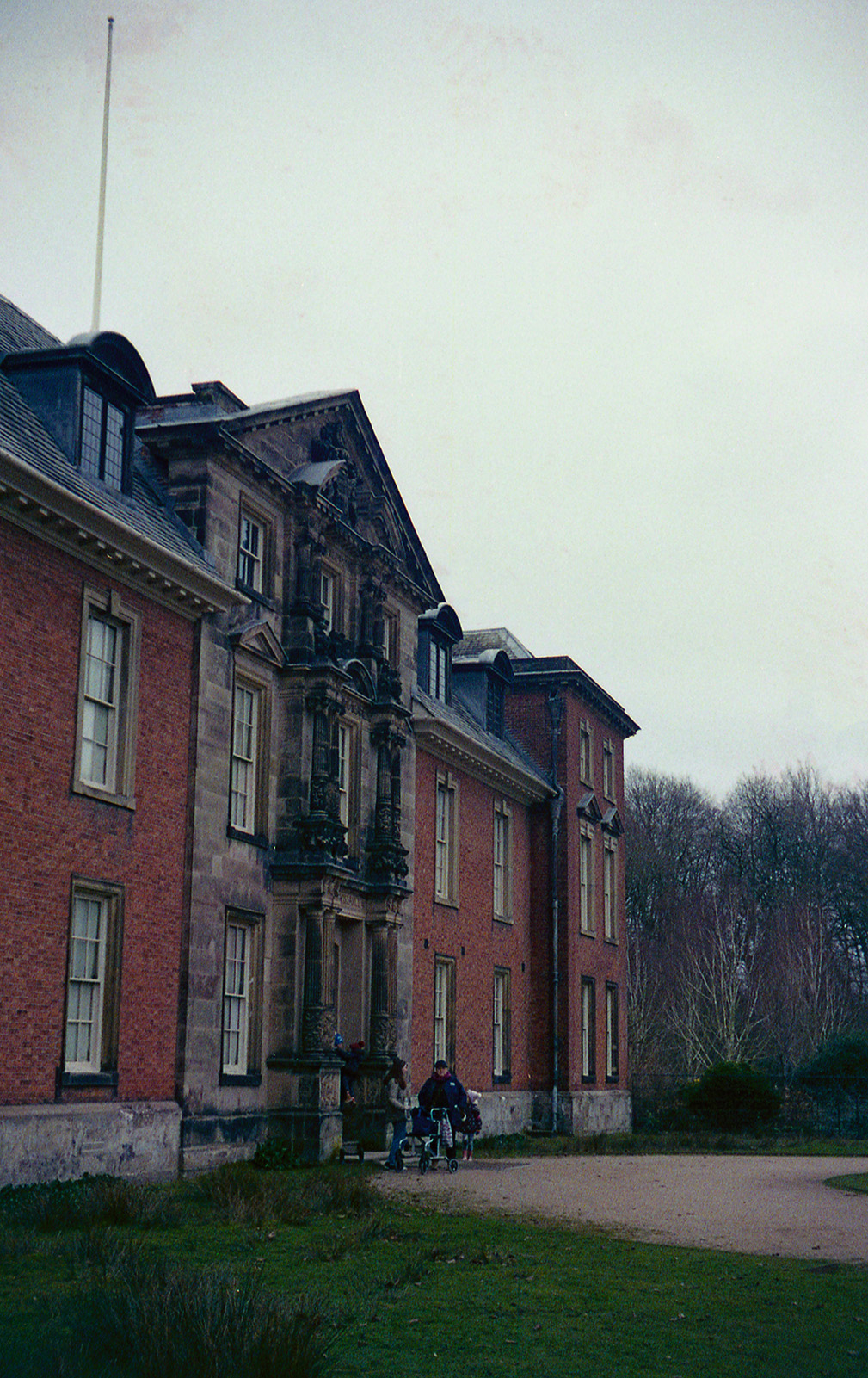
While I’ve gone over how it feels, what about the end results? To evaluate the camera (after the first failed attempt) I used a roll of Kodak UltraMax 400. Theres no special reason for the film choice other than it was the cheapest stuff I had in after it butchered a roll of Portra 400. In terms of subject material, I went for mix of Landscape and cottage-style architecture to replicate some of the scenery from my last review. Instead of Style Village, there’s a mix of Wales and Dunham Massey.
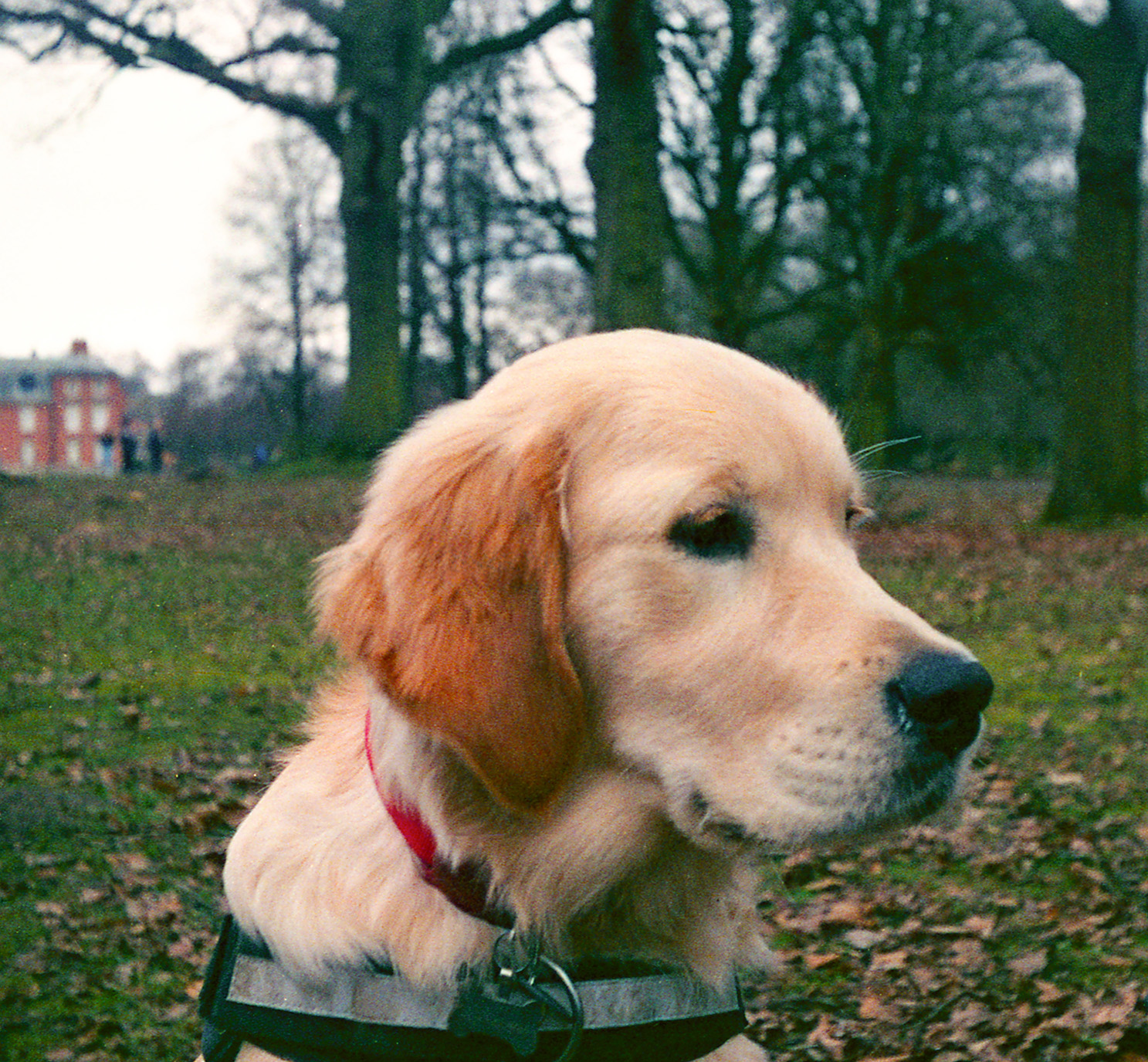
Overall, the camera’s lens isn’t terrible. The slight softness becomes apparent fairly quicky. Although comparing the brickwork from these photos, and those of the TW2 really highlight the extent of what this lens can do (or limitations of the viewfinder). It’s fine and useable, but it’s not a hidden secret gem. However, that again can be a positive – say for trying to re-create the 1950s lens aesthetic, and that softness does bring a certain warmness to the images. I have seen reviews of older Pax cameras which use a similar lens, and they too can produce results well outside what is expected for what is supposedly a cheap camera.
For those of you that are into that whole Bokeh thing, the background blur is much to be desired, leaving mushy and unpleasing backdrops. It seems there is also vignetting with the photographs – but I’m not that type of reviewer with test rigs to make that type of judgement call.



Should you get one?
Fool’s gold (a.k.a Pyrite) is an iron sulphide which due to its lustre, and brass yellow hue has been said in myth to have trick prospectors into the belief they’ve hit the jackpot. For this it gets a bad reputation and is often sold as a cheap novelty souvenir. Yet, it remains something pretty to look at, and still has it’s uses.
The Pax M2 is the Pyrite of cameras. While it’s roots certainly lie in the era of Lecia copies, and looked down upon, it’s not a bad camera. I’d argue the bad reputation for any Pax camera is due solely as a point of comparison with a much more expensive and popular brand with vocal fanbase – and not for recognition for what it is. A cheap for the time camera that did its job well.
If you want the experience of what 1950s photography was like, you want it to be small, economical, and mostly pretty to look at, you could do worse than the Pax M2 – provided you can find a working one – or at least one you can fix.
Sources
- CameraCollector.net (April 2024). Yamato model list. Available at: https://cameracollector.net/yamato-model-list/
- CameraCollector.net (April 2024). Yamato Pax M2. Available at: https://cameracollector.net/yamato-pax-m2/
- Eckman, M. (2020). ‘Pax 35 (1952)’ MikeEckman. Available at: https://mikeeckman.com/2020/10/pax-35-1952/
- Jacoby, J. (May, 2024). ‘The Fascinating History of Leica Copies, From Braun to Zorki’, PetaPixel. Available at: https://petapixel.com/history-of-leica-copies-from-braun-to-zorki/
- LeitzMuseum.Org (n.d). Leica Copies. (Last modified 2015, March). Available at: http://www.leitzmuseum.org/CameraMakes/LeicaCopies/Copies.html
- McKeown, J.M., & McKeown J.C (2001). McKeown’s Price Guide to Antique & Classic Cameras 2001-2002.
- Naylor, P. (2011). ‘My Yamato Collection’. Flickr. Available at: https://www.flickr.com/photos/32113303@N07/6542322957
- Oleson, R. (2009). ‘Pax M2’. Flickr. Available at: https://www.flickr.com/photos/rick_oleson/3342376029
- Popular Photography (April 1957). Special Japanese Photo-Industry Section. Volume 40, Issue 4.
- Yamato (1957). Pax M2 Instruction Manual. Available here: https://www.pacificrimcamera.com/rl/03270/03270.pdf